‘Nigeria’s network gaps kill battery, overheat mobile phones’
 By Upfrontdigital News
0
207 Views
By Upfrontdigital News
0
207 Views
By Upfrontdigital News
0
207 Views
By Upfrontdigital News
0
207 Views
By Favour Unukaso
WHILE Nigeria’s push toward 5G and expanded mobile connectivity continues to dominate headlines, a new report revealed that the quality of telephone signals might be doing more than just buffering videos but actively draining users’ battery and damaging devices.
The study, titled: “The Real Mobile Experience,” prepared by Ookla on behalf of the Nigerian Communications Commission (NCC) analysed millions of data points across the country to identify ‘high-stress’ zones where smartphones are forced to work overtime just to stay connected.
According to the study, the ‘Orange Zones’: Where Battery Life Goes to Die, highlighted a direct correlation between network struggle and power consumption. By comparing battery usage during peak afternoon hours (12:00–16:00) to quiet night hours, researchers identified ‘High Drain Zones’, the top 10 per cent of areas in Nigeria where phones consume the most power.
The Ookla study showed that if a user finds himself or herself in one of the orange-mapped zones, “you aren’t just losing power; you’re losing performance. At that point, the data shows that download speeds are 21 per cent slower than low-drain areas, while upload speeds, a staggering 30 per cent slower.
“In terms of latency, it said an additional 7ms of lag, making real-time gaming or video calls noticeably choppier.”
NCC building, Abuja
The report also tracked ‘Thermal Status,’ identifying regions where devices frequently overheat. These zones, usually marked in red, according to Ookla are often a result of devices struggling with poor signals or heavy data processing under sub-optimal network conditions.
According to the study, when a phone overheats, it enters a self-preservation mode, intentionally slowing down its own processor to cool off. Ookla said this leads to 23 per cent lower download speeds in hot zones; increased buffering during video streaming and long-term hardware damage, potentially shortening the overall lifespan of expensive smartphones.
The findings suggested a widening digital divide in Nigeria. Ookla observed that while coverage maps may show a signal, the quality of that signal varies so wildly that users in high-stress areas are paying a hidden tax: more frequent charging, slower Internet, and faster device degradation.
The report noted that poor network conditions do more than just buffer a video; they impact daily life. It added that users in affected areas have their mobility restricted by the need to charge more frequently.
Ookla submitted that as Nigeria continues its transition to 5G, service providers should wake up, stressing that coverage is only half the battle, stability is what saves the hardware.
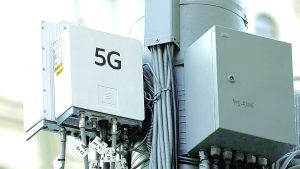
5G Mast
MEANWHILE, NCC’s Industry Performance Report for Q4 2025 revealed that 5G remained elitist with fewer individuals having access.
The report said about 55.4 per cent of Lagos State remained without 5G coverage as of Q4 2025 despite steady improvements in deployment.
According to the report, three years after the first 5G launch by MTN, followed by Airtel and Mafab Communications, there is still a wide coverage gap even in major cities such as Lagos and Abuja.
Presenting the report, the Commission’s Director of Technical Standards and Network Integrity, Edoyemi Ogoh noted that where 5G is available, user experience has largely met expectations set during the spectrum auction. According to him, consumers using 5G enjoy significantly better speeds and overall performance compared to older technologies.
However, the limited footprint of the network continues to constrain its impact.
“In Lagos, for example, the coverage gap is about 55.4 per cent, in terms of areas where there is no 5G coverage at all, compared to 47.4 per cent in Abuja,” he said.
While the coverage gap remains wide, the NCC data showed progress compared to earlier periods.
In Q3 2025, Lagos recorded a much wider 5G coverage gap of 70.9 per cent. The reduction to 55.4 per cent in Q4 indicates that operators are expanding coverage, albeit at a pace that still leaves many areas underserved.

A similar trend was observed in Abuja, where the 5G coverage gap improved from 65.6 per cent in Q3 to 47.4 per cent in Q4 2025.
NCC said this showed that deployment is moving in the right direction, but far from complete.