Telcos quell tariff hike fears, activate 2.29m new SIMs
 By Upfrontdigital News
0
344 Views
By Upfrontdigital News
0
344 Views
By Upfrontdigital News
0
344 Views
By Upfrontdigital News
0
344 Views
By Favour Unukaso
NIGERIA’s telecom operators have moved swiftly to calm growing anxiety among subscribers over possible tariff increases, following the Nigerian Communications Commission’s (NCC) review of Mobile Termination Rates (MTR). In a strong reassurance, the operators stated that the adjustment is strictly an industry-level measure and will not translate into higher call or data charges for consumers.
At the same time, the sector recorded a significant milestone: 2.29 million new SIM cards were activated in April 2026, according to fresh NCC data. This surge underscores the resilience of Nigeria’s telecom market, which continues to expand despite economic headwinds.
The telcos under aegis, Association of Licensed Telecom Operators of Nigeria (ALTON) said the Mobile Termination Rate (MTR) is a between telcos and not expected to be a burden on the about 188 million subscribers in the country.

Adebayo, ALTON boss
The Chairman of ALTON, Gbenga Adebayo, at the weekend on a monitored television programme, said: “I must assure the public that what is going on is a regular process where our regulators determine what is a fair price for operators to charge amongst themselves, for calls they carry and terminate on each other’s network.”
He said there was no discussion of upward review of tariff for telecom consumers, explaining that what NCC started is a cost studythat destermines wholesale rate between operators, which is the internal charges among service providers.
The current MTR, which is the wholesale charge one network pays another when its customers place calls to different networks, has remained stagnant at N3.90 per minute for generic operators and N4.70 for new entrants since 2018, despite transformative changes in Nigeria’s economic and technological environment.
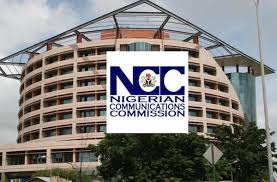
NCC building, Abuja
Industry stakeholders have long argued that the outdated rate regime no longer reflects operational realities. Since the last determination, Nigeria has witnessed significant naira depreciation, soaring inflation, and spiralling energy costs that have fundamentally altered operator cost structures.
Meanwhile, the activation and reactivation of 2.29 million new SIMs in April pushed active subscriptions from 185.7 million in March to 188 million a month after. Also, broadband subscriptions climbed to an impressive 120 million milestone (55.6 per cent penetration) from 117 million but Internet data consumption suffered a noticeable slump.
In April, data consumption dropped to 1.414 million terabytes from 1.422 million terabytes recorded in March. In February, data consumed was 1.260 million terabytes as against 1.385 million in January.
It can be deduced that while Mobile Network Operators (MNOs) have expanded their high-speed Internet footprints, driven by aggressive infrastructure deployment and 5G rollouts, the volume of data passing through these networks shrank in the month under review.

Maida, NCC EVC
It also means that while more Nigerians are holding active data-capable SIM cards, their actual time spent online is being sharply curtailed.
Industry analysts attribute this digital slowdown to persistent macroeconomic headwinds. Spiraling inflation, food insecurity, and the biting impact of recent tariff adjustments may have forced a large percentage of subscribers into strict data rationing. For the average consumer, Internet data has shifted from a casual utility to a heavily policed expense. Millions of users are turning off background data, bypassing video streaming, and restricting their online activities strictly to essential communications.
Further analysis of the April Subscription Data released Friday, MTN maintained its dominance with 96 million subscribers and 51 per cent penetration. Airtel is second with 34 per cent market reach and 64.6 million users. Globacom has 23 million customers and 12 per cent penetration. T2 held tight its 3.5 million users and 1.88 per cent spread.
Network usage showed that 4G penetration was 54.41 per cent, 2G, 35.93 per cent; 3G, 5.32 per cent and 5G, 4.34 per cent.
Providing more insights into the data, telecom expert, Kehinde Aluko, said the trend introduces a tough puzzle for major telcos like MTN, Airtel, and Globacom. He said on one hand, their capital expenditure (CapEx) remains high as they comply with regulatory mandates to expand coverage and meet the targets of the National Broadband Plan, “on the other hand, they are facing a squeeze on Average Revenue Per User (ARPU) in real terms. The industry is effectively dealing with “silent connections” subscribers, who exist on the grid but lack the economic disposable income to actively feed their bandwidth.
“Infrastructure challenges also continue to shadow these numbers. Despite the high subscriber count, frequent fiber optic cuts, vandalism, and the high cost of powering base stations with diesel continue to impair the quality of service, occasionally dampening user appetite for heavy data usage.

Fibre optic cable
“If this trend continues, the federal government’s digital economy goals could face a structural bottleneck. Reaching 120 million broadband users is a massive victory for digital inclusion on paper, but turning those connections into active economic drivers requires affordable access. Stakeholders are now warning that without immediate economic stabilisation or innovative, consumer-friendly data pricing structures, Nigeria’s massive broadband engine will continue to run below its full capacity.”