NCC flags 1.58m fake IMEIs in nationwide crackdown on counterfeit devices
 By Upfrontdigital News
0
2 Views
By Upfrontdigital News
0
2 Views
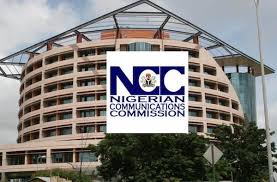
NCC building, Abuja
By Favour Unukaso
IN a decisive move to sanitize the nation’s telecommunications sector and protect consumers, the Nigerian Communications Commission (NCC) has carried out a major crackdown on counterfeit and unregistered mobile devices.
According to recent data presented by the Commission, over 1.58 million distinct fake or cloned International Mobile Equipment Identities (IMEIs) have been restricted on new SIM cards between November 1st and 24th, 2026.
The aggressive enforcement is part of the NCC’s broader “Device Checker” initiative, aimed at eliminating the proliferation of substandard handsets and curbing the security risks associated with unregistered devices.
In an interaction with journalists on Friday in Lagos, Head Compliance Analytics and Intelligence Unit, NCC, Ayemo Omu, said there has been a steady and encouraging uptake in its registration drive.
Since October, the NCC has onboarded 874 importer and dealer accounts, with 537 of these actively uploading stocks. This has resulted in the registration of nearly seven million devices (6.95 million) and 14.5 million IMEIs, factoring in dual-SIM capabilities.
The geographic distribution of these registrations is heavily skewed toward commercial hubs, with Kano State leading the charge with 586 accounts, followed by Lagos with 77. Notably, the drive has reached 31 states, indicating a growing nationwide compliance.
“Growth continues,” Omu noted, highlighting an addition of 2.11 million devices since late October, translating to an average of about 16,400 devices registered daily.

SIM cards
A critical pillar of the NCC’s strategy is the pre-upload IMEI integrity check. The data shows that these automated checks are effectively catching irregularities before devices reach the consumer market. Out of 8.8 million IMEI checks run by importers, over 607,000 irregularities were stopped.
These irregularities, according to Omu, included missing storage capacities, wrong formats, and most concerningly, 10,721 fake IMEIs (not in the GSMA database) which were caught and kept out of the register. The NCC clarified that most issues are paperwork-related and can be fixed by resubmitting, ensuring legitimate devices are not unfairly penalized.
To enforce compliance without abruptly cutting off millions of citizens, the NCC has adopted a phased, notification-driven approach. In just 10 days (November 15-24), the Commission delivered 5.46 million SMS notices to subscribers.
These notices alerted users to issues such as unregistered phones, upcoming grace period expirations, and fake IMEIs. The strategy appears to be working: 75,357 phones became “verified” after a notice was sent, and 10,737 older phones were confirmed and whitelisted.
Despite the grace periods, the NCC has enforced restrictions on non-compliant devices. The data breaks down restrictions by telecom provider, showing that MTN subscribers were most affected, with 1.86 million restricted pairs (52 per cent), followed by Airtel with 1.38 million (39 per cent), Glo with 309,000 (nine per cent), and T2 with 13,000.
The rationale for restriction varies. Omu said the the largest category involved older phones with fake/invalid IMEIs moved to new SIM cards, which saw over 2.8 million devices restricted after a 24-hour grace period. Another 742,749 devices were restricted for having fake or invalid IMEIs outright.
The Commission also mapped the geographical concentration of counterfeit devices, identifying specific hotspots. Kano State recorded the highest number of lines on fake handsets (42,297), followed by Kaduna (31,043), Bauchi (28,067), and Lagos (23,055).

Interestingly, the breakdown of cloned IMEIs by device category revealed that smartphones are the most counterfeited (18,128 incidents), but significant numbers of Wi-Fi routers (6,532) and feature phones (6,342) were also found to be non-compliant.
Earlier, NCC Assistant Director/Head, Wireless Network Technical Standards and Network Integrity Department, Kings Adeyemi, said the Commission’s ‘Interventions and Current Status’ report indicates that the agency is not resting on its laurels. He said pre-upload IMEI checks and consumer verification (via the USSD *315# code) are now live across all networks.
Kings, an engineer, said Commission is also planning to expand its engagement with the Central Bank of Nigeria (CBN) regarding Point of Sale (POS) terminals and is proposing clearer responses for ‘unknown’ and invalid IMEIs.
With market sensitization and enforcement visits ongoing, he said the NCC is sending a clear message: the era of unregulated and counterfeit devices in Nigeria’s telecom ecosystem is coming to an end.